








































We asked the experts to find out how much our smartphones are tracking us.
Are you worried about your smartphone monitoring what you say? We spoke to experts to find out if we should be worried and to find out what we can do to protect ourselves.
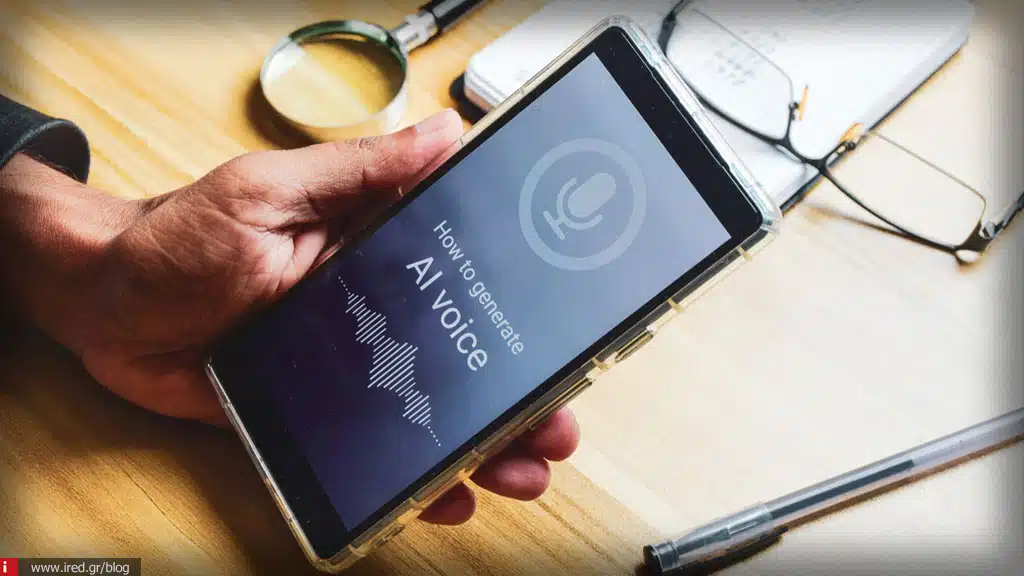
The use of smartphones is almost universal nowadays and the microphone is a main component of them.
But microphones are not only used for calls anymore. Various digital assistants like Siri, Google Now, Microsoft Cortana, etc., are commonplace now.
We use them to look for answers to a variety of questions, from the weather to dating and everything in between. Various apps and games can also access the microphone by our agreement. But do we know what they are actually listening to and what they are doing with the data they are recording?
"Smartphones are little surveillance devices," said Michelle De Mooy, director of the Privacy & Data Project at the Center for Democracy and Technology (CDT). "We may not think they are because they are personal devices, they travel with us, we sleep with them, but they are actually collectors of countless pieces of information and audio together."
If you doubt it, but you use Google's services, then take the trouble to visit this the link.
Once you're signed in with your Google account, you'll see all your activity with Google programs like Chrome, Search, YouTube, etc. Tap the filter by date and product at the top, then tap Voice & Audio and tap Search. If you ever used Google voice search, you'll then see a list of audio recordings that you can play and hear what you were saying.
Very few people realize that the data is there. Google is quite "transparent" in that it lets you see what it has collected, but it doesn't say what it does with it. Most other companies not only don't say what they have collected, they don't say what use they make of the data they collect.
Your data is of course not controlled by a real human being. Companies use advanced algorithms that look for specific data that could be useful to them for their further strategy.
Audio data can reveal all kinds of information. Ambient noise, for example, can reveal where we are. Also background sounds can tell who we are with. The use of the microphone serves to measure noises and our sleep behavior even.
See also: Your iPhone is watching you in your absence, stop it
"Even if you don't think you're saying anything important or worthwhile, the data is "married" together and mixed with all kinds of other data that has been gathered to create a very accurate picture of your character, one that you don't have about yourself."
explains De Mooy.
"Most of these technologies don't go into a vacuum, they don't get locked up in warehouses, but they interact with each other and with every other kind of technology we have."
Last year the Center for Democracy in Technology (CDT) alerted the Federal Trade Commission (FTC) to a new technology called SilverPush. It uses audio transponders in order to track our activities on any device.
So our TV broadcasts a tone every time there are ads on, which we don't hear, but our phone does. So they can connect our phone to our TV and know that those devices belong to us, and what shows we watch on the TV e.g.

Advertising companies have developed a significant number of device-matching technologies because they can track our activities with great precision and target their ads according to our preferences.
Of course it is not difficult to imagine other uses for such a technology. Any government that wants to know what we're doing on TV can send out a tone of its own and see which mobile phone is connected and thus which citizen or even an entire family or group of people.
If you're worried that your smartphone might be listening to your conversations, you're not alone. The Internet is full of stories about "digital eavesdropping". Many people feel - and not unfairly - that conversations they had near their smartphone were used for targeted ads to them after a while.
After Facebook was accused of such practices, it issued (denying) a short response saying, "Facebook does not use your phone's microphone to notify advertisers or change the content of what you see on your wall ... We only use your microphone if you've given us permission and there's a feature that needs it."
So why are so many people convinced that Facebook was actually listening and changing the ads based on what they said?
"There are two possible explanations", explains Professor Jason Hong of the School of Computer Science at Carnegie Mellon University.
"Either it's a coincidence, or they happened to be looking at a website and then discussed it with their friends. Facebook is connected to tons of websites and collects data about the pages we visit and informs advertisers, but, as far as we know so far, it doesn't use the microphone."
See also: Mobile monitoring: Everything you need to know
What's interesting is that Facebook doesn't explain what it uses the recorded data for, but its entire business model is based on data collection and laser-like focus on ads. We might think that the world isn't lost for a few targeted ads, but the intricacies are far deeper.
"When you use a free service, you are actually paying with your personal information and the final cost of such a transaction is not clear in most cases," says De Mooy again. "The Internet that I see is extremely different from what you see. The content we see reflects the data that has been gathered about others."
This means that you may see different ads depending on your gender, nationality, profession, hobbies, etc.
So what do we do if we are concerned about this?
With services like Siri, or Google Now, your phone is constantly listening for a command, but it's done locally on your device. It doesn't record your conversations because you gave a weather command.
But it can start recording and sending the audio file to the internet. You can disable these functions easily. E.g., on Android go to Settings > Google > Search & Now > Voice and turn off "Ok Google". Similar is done for Siri on the iPhone.
"Big companies have a very important incentive to be transparent about what they do because the Federal Trade Commission (FTC) and other agencies will fine them if they are not.",
Hong says.
"There are also many researchers analysing these applications."
Google Now video here
It is unlikely that these functions will eavesdrop on their own, but it is still not clear what they do with what they hear. Even if you bother to study the privacy policies they provide - which almost no one does - it's still unlikely that you'll figure it out.
"No one reads privacy policies and everyone would be surprised to learn how much data is collected", says Hong.
And the most disturbing thing is some malicious or even dubious application to open the microphone on its own and listen to what we are saying. Those of you who watch the Person of Interest series know that much of what it shows is not science fiction at all, but actual technologies.
See also: Facebook will now track you even if you don't have an account
"With GPS at least, there's an icon that notifies that an app is using it, but for the microphone and other sensors on our phone, we don't know when they're being used," Hong continues.

Using familiar applications and not giving our microphone freedom of use is a good start. "Don't rush to be the first to try a new app, but wait a week or two. Google and Apple always have ways to discover malicious apps and remove them," says the professor.
It is also a good idea to take another look at which applications you have given permission to access your microphone and camera. For Android look in Settings > Privacy and safety > App permissions and for iOS in Settings > Privacy. Both have a setting for the microphone that shows all the apps that have access to it and you can disable any you don't want or consider suspicious.
Should we be worried?
Audio data collection is still essentially immature compared to the other data collection methods that companies use to monitor our general activity, but it is slowly becoming more and more dangerous as our devices are constantly "listening" to us.
The CDT believes that a limit should be set through legislation that protects us, but it is also trying to convince companies that collecting less data is also in their interest. They don't need as much volume and are more exposed in terms of legislation.
Many companies collect everything they find in front of them with the idea that they will eventually find something to do with it.
"There is a condition for that", says De Mooy. "We call it accumulation."
Much of this is done with the idea that it will make our lives better, but "the road to hell is paved with good intentions" and we don't know what will happen to our circumstances. At present we cannot have information because there is no information about what is going on behind the scenes.
"If you are going to use these services on your smartphone, it's good to know that they are not private.", says De Mooy. "They are not personal assistants or friends, but a small monitoring device.
Social networking applications are designed to collect and share our personal data. Be careful, check the default settings and protect your privacy."
See also: Disable the recording of motion and fitness data from iPhone / iPad
from Elichord