



































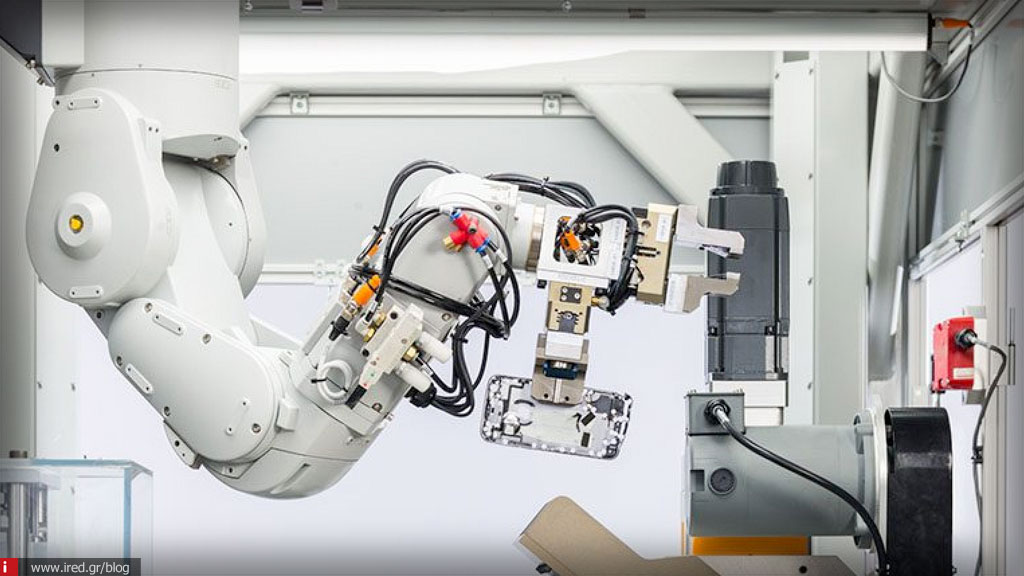

It's been two years since Apple introduced the iPhone disassembly robot called Liam. Now it's time to meet the company's new creation that goes by the name "Daisy". Daisy is more efficient at recovering even more valuable iPhone materials, for recycling of course. Its speed is such that within an hour it can disassemble and sort through 200 iPhone devices.

Daisy's introduction is accompanied by Apple's Earth Day donations of its GiveBack program to the non-profit organization Conservation International. Apple's GiveBack program allows Apple customers to return their old devices to Apple Stores for recycling, with the option to exchange them for a newer device.
Read also: Guide: install the trial versions of iOS 11.4 on iPhone
Apple says that Daisy is based on the technology of the previous Liam robot and has the ability to "disassemble" nine different iPhone models:
"Apple's new disassembly robot, Daisy, is the most efficient way to recover even more valuable iPhone materials. Created during the R&D years, Daisy carries revolutionary technology based on that of Liam, which was Apple's first disassembly robot in 2016.
Daisy was created from some parts from Liam and has the ability to disassemble 9 different iPhone versions, saving the high quality parts for recycling. Daisy can disassemble up to 200 iPhones within an hour, removing and storing their parts, enabling Apple to recover materials that traditional recyclers could not."

512Tech gives us even more clues about Daisy:
"Daisy, the culmination of five years of Apple research, is the offspring of Liam, who was introduced in March 2016. Liam, was three times bigger, and longer."

The company's plan is to bring Daisy online in 10 regions within the next year, especially in those where the iPhone is highly mobile.
Read also: smartphones betray liars
Closing
Apple is making clear moves and steps in the direction of protecting the environment. Daisy is an excellent example that other companies should emulate in order to make their devices even more environmentally friendly through the recycling process. We believe that the evolution of robotics will lead to even more dazzling results in the future, as it has penetrated many areas and achieved great things.