



































Why batteries have problems and what new technologies will fix them.
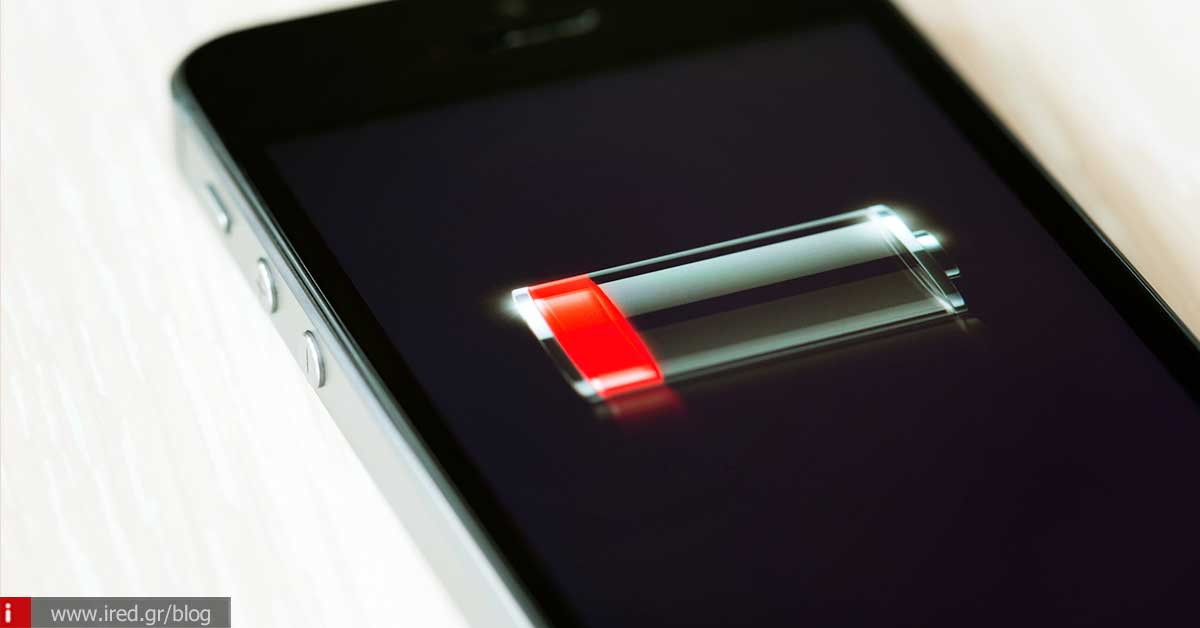
The recent fashion and increased demand for external batteries shows how much the users of various electronic devices have been gadgets need their devices to stay charged for as long as possible and how great this need is. A survey conducted in 2012, showed that battery life was one of the most dissatisfying features among users. And this is unlikely to change given that the average smartphone lasts at most 8 hours browsing the internet before... dying a heroic death.

At first, this looks like the fault of the manufacturers smartphone. You could say that they choose what batteries to put in their devices. But the truth is more complex: the fact is that the lithium batteries have changed very little since they first appeared more than 23 years. This long-term static situation has forced companies to compromise the size of batteries, devices or both. Either one will have a sleek phone, or a powerful battery.
So, how exactly did we get to this point and where are we going? Improved batteries are on the way, but will they ever appear on the market? Are there new technologies that will liberate us from the old lithium batteries and there will be solutions in the meantime to make our lives easier with them. That's what we try to see in this article.
See also: iOS 8 - Which apps are eating up your battery?
How batteries work
The first rechargeable lithium batteries had ... explosive personalities (they literally blew up in your face). The companies Sony and Asashi Kasei (a chemical company) learned that the hard way when, the 1991, one of their first lithium batteries exploded and caused burns on the face of a mobile phone user.
But that didn't stop the batteries lithium from becoming the only batteries in modern devices. The reason? They have a much larger capacity at their size than any other solution and are virtually maintenance-free. Unlike other technologies, they do not require discharging; they do not experience the "memory", have no oxidation and contain far fewer toxins than others. Simply put, they are our best solution for now.
But when it comes to the size-to-capacity ratio, things are difficult. For example, the Nokia Lumia 1520 Endures 107 hours with one charge and it has a size 6,4 inches. The same as the Huawei Ascend Mate2 4G with 6.34 inches. The only smaller smartphone that can withstand a similar duration of use (101 hours) is the Xperia Z3 Compact but which offers a screen resolution 720p to achieve this, which is unacceptable for a device of the 600€.
The really frustrating thing though is that even these big batteries don't last long. Η Apple says that the battery of a iPhone will fall on the 80% of its capacity in the 500 charges, which means that if we charge the device once a day, this will happen in the year and a half of use.
Beyond that, there is the issue of security. Today's lithium batteries may not be the dangerous batteries of yesterday, but still their inappropriate use can lead to short circuits, decomposition or the release of hazardous gases. Watch the video below that graphically illustrates the dangers.
With all this in mind, it is now necessary for new technologies in the battery sector to emerge and fix the problems.
See also: iOS 8 - iPhone: battery test (and solution in case of overconsumption)
The batteries of the future are coming slowly

Some technologies of the future come from ideas of the past. For example, research in University of Stanford which led to the isolation of the anode in lithium batteries with a layer of carbon molecules. This doubled or even tripled the life of the batteries.
A pure lithium battery is the surest descendant of today's batteries. But the problem lies in production. It would need the performance of such a design to reach a stable 99.9% to get into mass production and, even then, the complexity of manufacturing it would drive up the cost too high.
That's why scientists at the University Riverside of California they turned to the sand. They collected grains with a high quartz content, mixed them with salt and magnesium and finally heated them to remove the oxygen and produce pure silicone. The final product has twice or three times the capacity of today's batteries.
But the sand batteries are not ready for manufacturing yet. Researchers need to find a way to produce silicone batteries in various sizes. Η greater battery they've managed to build is the size of a small coin.
However, the need for efficiency is so great that companies hardware and software to develop lateral ways to address the strong need for longer life in our devices.
One of the main causes of battery drain is the Wi-Fi. Modern devices constantly monitor the wireless network looking for cleaner communication channels, new data, etc. At University of Michigan, the professor Kang Shin and his student Xinyu Zhang found a solution called Energy-Minimizing Idle Listening (E-MiLi).
Η E-MiLi minimises the power consumption of Wi-Fi when it's not in use, which goes a long way to 44% gain in battery life. And yet, the E-MiLi is compatible with the 92% of today's mobiles. But, there's a problem as always. It requires special wireless routers with the necessary firmware to work.

Another idea that researchers are struggling with is rapid charging. This is a term that covers combinations of solutions hardware and software, but the result is one: really "zeroes" charging times. In the middle of the 2013 presented a supercapacitor that could charge a mobile phone battery in 30 seconds. The speaker Blueshift Bamboo can be charged in a few minutes and last for 6 hours of operation.
There are also chargers that charge the battery via sunlight. Researchers at UC San Diego they made a "battery tattoo" that charges our battery through hand sweat. And researchers at Nokia and Queen Mary University of London, working on "nanogenerators" that will charge the battery through sounds such as the human voice, car traffic and music.
See also: Tips for improved battery life - iPhone with iOS 8
There are already improvements
The problem to be addressed is essentially the same as it was before 23 years: scientists have to bypass an outdated technology and its limitations. But the reality is that, with the exception of external chargers (battery packs), we have no better alternative than batteries lithium. All other technologies are still in the research stage and are far from being ready for the production line.
There are some improvements however with technologies that help rapid charging via carbon dioxide anodes titanium, or multi-layer lithium batteries that increase capacity. A new technology of NASA converts heat from car exhausts into electricity, and researchers at Fuji Pigment are getting closer to commercialising aluminium gas technology that will offer capacities 40 times larger than existing ones.
So it's only a matter of time before we start seeing new technologies in the battery sector to appear on the market for use. Maybe the next mobile us not to have a battery with "nanogenerators", but an ultra-fast charging technology is very likely to appear relatively soon.
And, although the death of ion batteries lithium is not yet visible, yet it is closer than ever.
from Elichord
See more: